
﷽
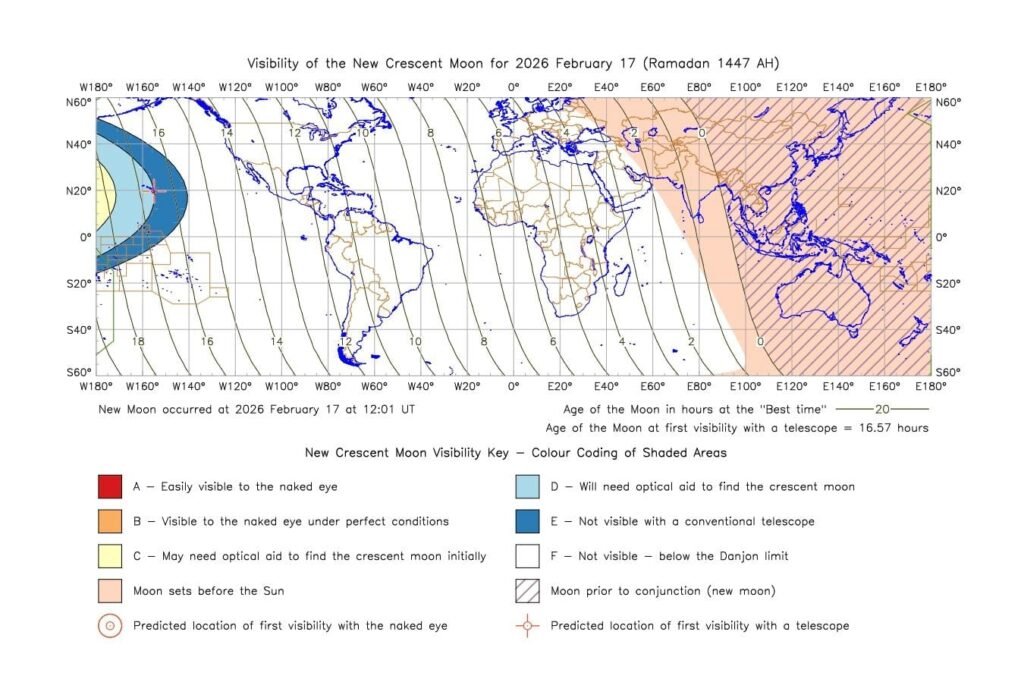
If Saudi Arabia is able to sight the crescent moon (on 17 Feb 2026) when it is practically impossible based on all established scientific parameters and visibility models (even with the most advanced telescopes) then they should declare their methodology so the entire world can update its models accordingly and make such sightings normal as well.
The scientific world would be astonished at such a feat, which seems to be achieved year after year when sighting is considered impossible even with advanced optical aid. All astronomical parameters and models would need revision, and Saudi Arabia would be recognised as a pioneer in establishing unprecedented new visibility standards.
Why doesn’t the global scientific community request their methodology and technology?
Established conditions for naked-eye visibility and telescopic visibility based on observation data and visibility models:
• Elongation (Sun–Moon separation): ≥7–8° (telescope: ≥ ~5°)
• Illumination: ≥ 3–4% (telescope: ≥ ~0.5–1%)
• Moon age: usually ≥ 18–20 hours (telescope: ≥ 15 hours)
• Altitude at sunset: ≥ 5° (telescope: ≥ 4–5°)
• Lag after sunset: ≥ 30–45 minutes (telescope ≥ 20–25 minutes)
Conditions in Saudi Arabia (Riyadh) on 17 February 2026:
• Elongation at sunset: ~1° or less
• Illumination: ~0.03% (essentially zero)
• Moon age at sunset: ~4 hours (conjunction at ~15:01 local time)
• Altitude at sunset: extremely low (near horizon)
• Moonset: within few minutes of sunset (sunset 17:48, moonset: 17:50 – ~2 minute visibility window)
All key parameters in Riyadh (and elsewhere in Saudi Arabia) on 17 February 2026 fall far below established visibility thresholds. Elongation is far below the 5–8° minimum. Illumination is far below even telescopic requirements. Moon age is only a few hours. Lag time after sunset is negligible (few minutes).
From an astronomical standpoint, crescent sighting, whether by naked eye or telescope, would be considered physically implausible under these conditions.

Muhammad Kalim Misbahi